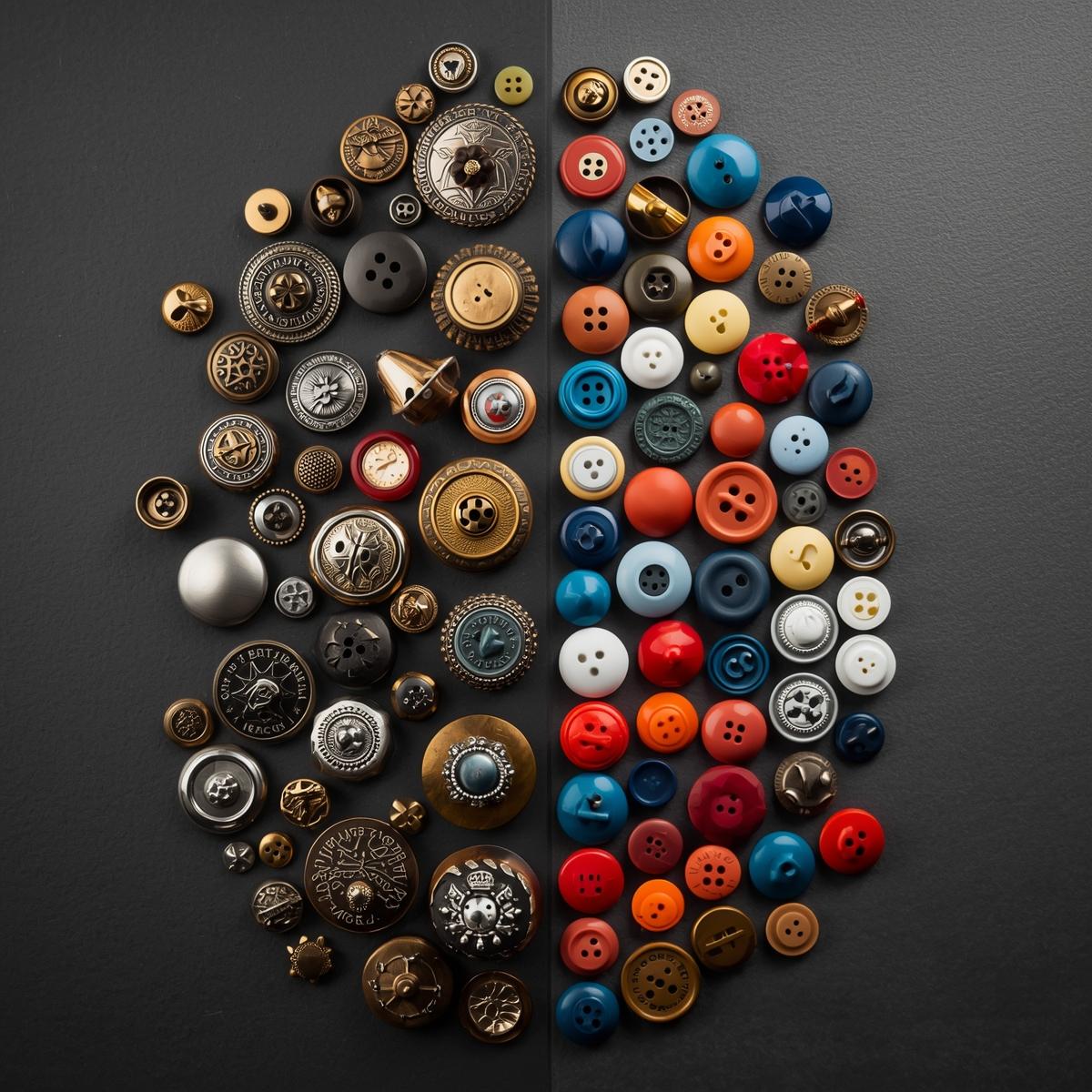
Buttons, though small, play a pivotal role in defining a garment’s style, functionality, and overall aesthetic. Whether developing a new product line, sourcing accessories for manufacturing, or expanding a collection, selecting between metal and plastic buttons is a critical decision. Each type offers distinct advantages, limitations, and ideal applications. The following overview provides a structured guide to inform your choice.
Metal Buttons: Durability, Elegance, and Premium Appeal
Metal buttons are commonly employed in denim, jackets, military uniforms, workwear, and high-end fashion.
Key Advantages:
- Exceptional Durability: Metal buttons are robust and resistant to wear, making them ideal for heavy-duty garments.
- Premium Aesthetic: They impart a sophisticated, elegant look that enhances the perceived value of a product.
- Heat and Wash Resistance: They withstand industrial washing and high-temperature ironing, suitable for garments subjected to frequent use.
- Variety of Finishes: Available in finishes such as antique, brushed, shiny, matte, brass, nickel-free, and gunmetal, among others.
Ideal Applications:
- Denim pants and jackets
- Coats and outerwear
- Bags and accessories
- Premium fashion collections
- Workwear and uniforms
Considerations:
- Heavier than plastic buttons
- Higher cost
- Potential for corrosion if low-quality metals are used
Plastic Buttons: Versatility, Lightweight Comfort, and Cost Efficiency
Plastic buttons remain the most widely used option due to their adaptability and affordability.
Key Advantages:
- Lightweight and Comfortable: Suitable for garments where comfort is essential, such as shirts, dresses, and children’s wear.
- Extensive Design Options: Easily customizable in terms of color, shape, texture, and pattern.
- Cost-Effective for Mass Production: Ideal for large-scale orders and budget-conscious collections.
- Corrosion-Resistant: Plastic does not rust or oxidize, making it suitable for humid environments.
Ideal Applications:
- Shirts, blouses, and dresses
- Children’s clothing
- Lightweight fashion items
- Seasonal or fast-fashion collections
Considerations:
- Less durable under extreme stress
- Can deform or melt under very high heat
- Generally perceived as less premium than metal
Direct Comparison
| Feature | Metal Buttons | Plastic Buttons |
|---|---|---|
| Durability | Excellent | Moderate |
| Weight | Heavy | Light |
| Cost | Higher | Lower |
| Customization | Medium | Very High |
| Heat Resistance | High | Medium |
| Corrosion | Possible (low-quality metal) | None |
| Aesthetic | Premium | Flexible & Trendy |
Selecting the Appropriate Button Type
The choice between metal and plastic buttons should be guided by the garment’s function, desired aesthetic, and target market:
- Metal buttons are recommended for high-durability garments, premium collections, denim, jackets, and formal outerwear.
- Plastic buttons are suitable for lightweight clothing, children’s wear, budget-conscious production, and designs requiring high customization.
Conclusion
Both metal and plastic buttons hold significant value in garment design and manufacturing. Metal buttons are distinguished by their durability and premium appeal, while plastic buttons excel in versatility, comfort, and cost-effectiveness. A careful evaluation of your collection’s identity, market positioning, and garment requirements will ensure the selection of buttons that enhance both style and performance.