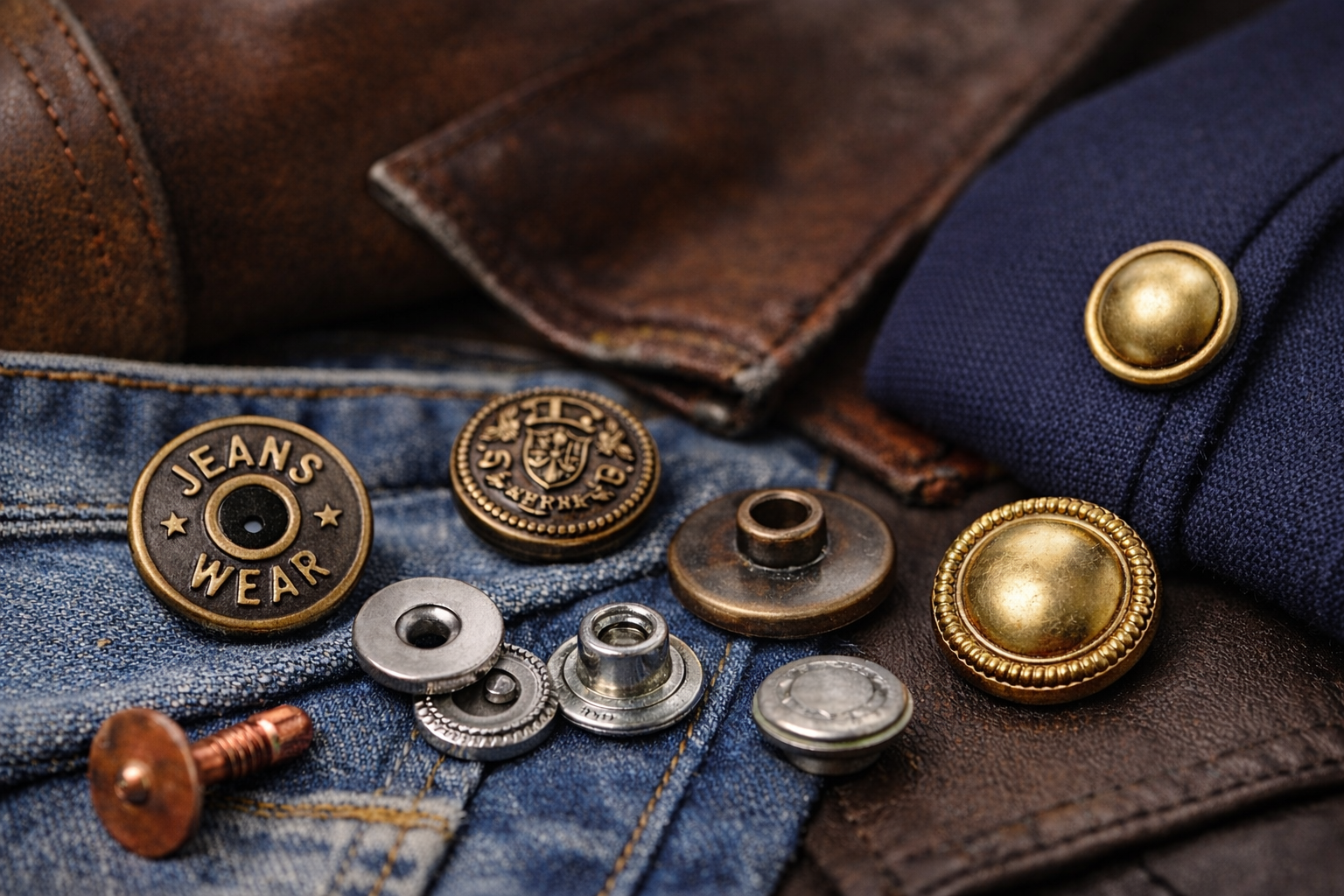
Metal buttons are more than simple fasteners—they are functional components that add durability, branding value, and aesthetic appeal to garments. From heavy-duty denim to premium blazers, the right metal button enhances both performance and design.
In today’s competitive apparel industry, selecting the correct type of metal button is not just a styling decision—it directly impacts garment strength, customer satisfaction, and brand perception.
1. Shank Metal Buttons
Overview
Shank buttons feature a loop (shank) on the back instead of visible sewing holes on the front. The thread passes through this loop, allowing the button to sit slightly raised above the fabric surface.
Common Applications
- Blazers and formal jackets
- Overcoats and winter wear
- Traditional and ethnic garments
- Premium fashion shirts
Advantages
- Elegant and clean front appearance
- Suitable for thicker fabrics
- Ideal for logo engraving or embossing
2. Snap Metal Buttons (Press Studs)
Overview
Snap buttons, also known as press studs, consist of two metal components that snap together securely when pressed.
Common Applications
- Denim jackets
- Casual shirts
- Babywear
- Sportswear and activewear
Advantages
- Easy and quick fastening
- User-friendly for frequent wear
- Provides a modern, minimal look
3. Jeans Buttons (Tack Buttons)
Overview
Jeans buttons are typically two-piece fasteners composed of a decorative metal cap and a tack pin. They are permanently fixed into the fabric, ensuring strong attachment.
Common Applications
- Denim jeans
- Denim skirts
- Heavy-duty trousers
- Workwear
Advantages
- Highly durable
- Resistant to pulling and tearing
- Ideal for thick fabrics like denim
4. Metal Rivets
Overview
Rivets are not traditional buttons but are essential metal fasteners used to reinforce stress points in garments.
Common Applications
- Pocket corners of jeans
- Workwear and uniforms
- Leather jackets
- Industrial apparel
Advantages
- Strengthens high-stress areas
- Enhances durability
- Adds rugged and premium appearance
5. Decorative Metal Buttons
Overview
Decorative metal buttons focus on design and branding. They may feature embossing, engraving, enamel filling, or custom logos.
Common Applications
- Fashion blazers
- Uniforms
- Luxury garments
- Branded apparel collections
Advantages
- Strengthens brand identity
- Increases garment value perception
- Offers full customization options
Common Materials Used in Metal Buttons
High-quality metal buttons are typically made from:
- Brass
- Zinc alloy
- Stainless steel
- Aluminum
Different finishing options include antique brass, matte nickel, gunmetal, electroplating, and custom enamel colors to match brand requirements.
Key Factors to Consider When Selecting Metal Buttons
When choosing the right metal buttons for your apparel line, consider the following:
- Fabric thickness—Heavy fabrics require stronger attachment systems.
- Garment purpose—functional use or decorative element?
- Target market—premium, casual, workwear, or children’s wear.
- Corrosion resistance—important for export and long-term durability.
- Customization needs—logo engraving, embossing, or special finishes.
Conclusion
Metal buttons play a crucial role in both functionality and fashion. Whether used in denim, formalwear, uniforms, or outerwear, selecting the appropriate type ensures durability, enhances garment appeal, and strengthens brand value.
For apparel manufacturers and fashion brands, investing in high-quality metal buttons is a strategic decision. The right choice improves product longevity, reinforces brand identity, and delivers better value to end customers.
Choosing the correct metal button is not just about fastening fabric—it’s about elevating the entire garment experience.